

Replace PRD with AGENTS.md: Three Universal Documents for Vibe Coding
PRD is a conventional habit, not a vibe coding requirement. AGENTS.md, SPEC, and an implementation plan cover what an AI agent actually reads.

Replace PRD with AGENTS.md: Three Universal Documents for Vibe Coding
PRD (Product Requirements Document) is a conventional developer habit that is not always relevant in vibe coding.
When an AI coding agent is built with full context, PRD often becomes redundant because AGENTS.md is already the universal documentation that covers the rules normally contained in a PRD.
Why PRD Is Not Always Required in Vibe Coding
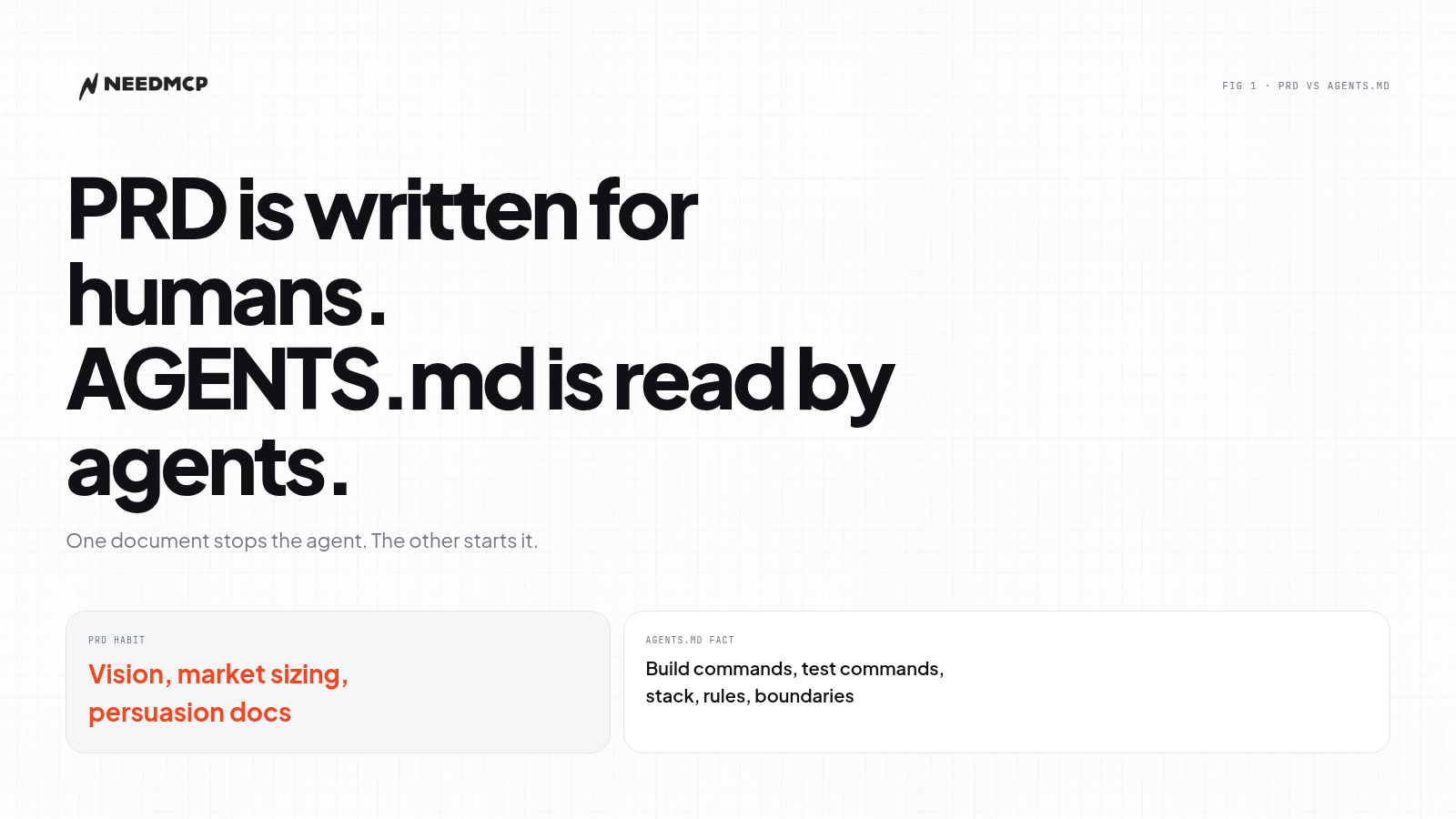
PRD is a document written by developers for developers, with a format designed for human organizations: vision, target market, user stories, and acceptance criteria. In vibe coding, the workflow is different. You work directly with an AI coding agent, not with a human team.
Reasons PRD is often unnecessary in vibe coding:
- AI agents do not need persuasion. PRD for humans often contains justification, market sizing, and vision statements intended to sell an idea to stakeholders. AI agents do not need to be convinced.
- PRD is not integrated with the agent workflow. AI agents read
AGENTS.mdautomatically at the start of every session, while PRD is usually stored in a separate folder the agent may not know exists. - PRD goes stale quickly. When requirements change, PRD must be updated manually. In vibe coding, decisions often change every session and easily get left in old chat history.
AGENTS.md: The Universal Document for AI Agents
AGENTS.md is a standard Markdown file at the repository root that AI coding agents read at the start of every session. Released by OpenAI in August 2025, then donated together with Anthropic to the Linux Foundation Agentic AI Foundation (AAIF) in December 2025. It is now adopted by more than 60,000 open source projects and is read natively by Codex, Cursor, Copilot, Claude Code (via import), Jules, Gemini CLI, Windsurf, and others.
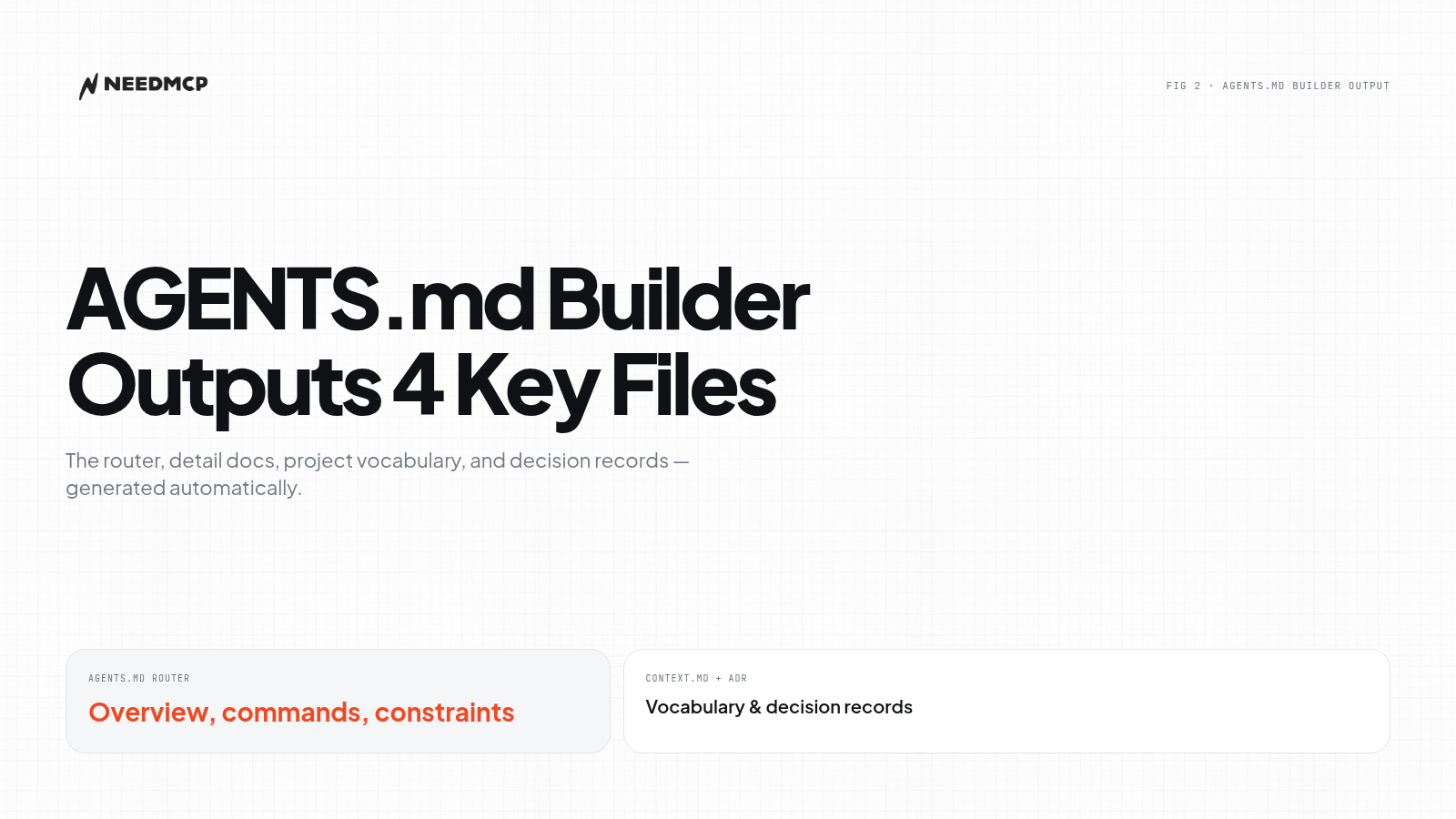
In NeedMCP context, AGENTS.md is built through the AGENTS.md Builder: a short interview run before starting vibe coding. The result is split into two parts:
AGENTS.md: a short router (~150 lines): overview, quick-start commands, hard constraints, and an index to other topic documents..agents/docs/: details that are only opened by the agent when a task requires them, so a small bug fix never drags deployment rules into context.
Two supporting files are generated:
CONTEXT.md: project vocabulary. Every word used inAGENTS.mdmust exist here first, preventing AI from inventing a second name for something already named.docs/adr/: decision records only for decisions that are hard to reverse, surprising without context, and a real trade-off. Not a diary.
Other Relevant Documents in Vibe Coding
Besides AGENTS.md, three MD documents are frequently used together:
1. SPEC (Specification)
SPEC describes how to build a feature, not what to achieve. In AI coding workflows, SPEC usually contains:
- Architecture and component structure
- Interfaces and event pipelines
- Dependencies and data flow
Example: GitHub Spec Kit generates spec.md (user stories and functional requirements) and plan.md (technical strategy), then details them into tasks.md.
2. Implementation Plan
An implementation plan is an ordered task list that turns SPEC into code. It contains:
- Implementation steps ordered by dependencies
- Links to acceptance criteria (AC)
- Clear boundaries, i.e. what is not done
An implementation plan is created after PRD/SPEC is approved, and only covers what is still not explicit in chat or project rules. Tools like spec-driven-development and agent skills for planning help generate this document automatically.
3. Skill Files (e.g. .claude/skills/ or .agents/skills/)
A skill is a SKILL.md file with YAML frontmatter that adds specific features to an AI agent. Unlike AGENTS.md which is always loaded, a skill is only loaded when needed, so long reference material does not empty the conversation context.
Examples of skill usage:
/vibe-prd: generates a PRD based on persona (Vibe-Coder, Developer, or Learner)spec-driven-development: creates specifications before codingimplement: writes code based on AC and SPEC
Where PRD Falls Short in Vibe Coding
| Weakness | Explanation |
|---|---|
| Not agent-native | PRD is designed for human teams, not for AI agents that read AGENTS.md automatically |
| Unneeded persuasion | Contains justification and vision statements that are irrelevant to an agent |
| Goes stale quickly | Requires manual updates when scope changes; easily left in old chat history |
| Too broad equals shallow | A PRD that covers too many features becomes shallow in every section; the agent fills gaps with its own assumptions |
| No implementation detail | PRD explains "what", not "how" which an agent needs to write code |
| Depends on input quality | A vague PRD produces vague tasks; "vague PRD in, vague tasks out" |
Recommendation
Do not start with PRD. Start with AGENTS.md through a short interview (5 minutes). Then add SPEC for technical detail, and an Implementation Plan for ordered steps. Use skills like spec-driven-development or implement to automate creation of these documents.
PRD should only be created if there is a specific need not covered by the three documents above, not because it is the default standard for every vibe coding project.
Keep reading
More from Guides
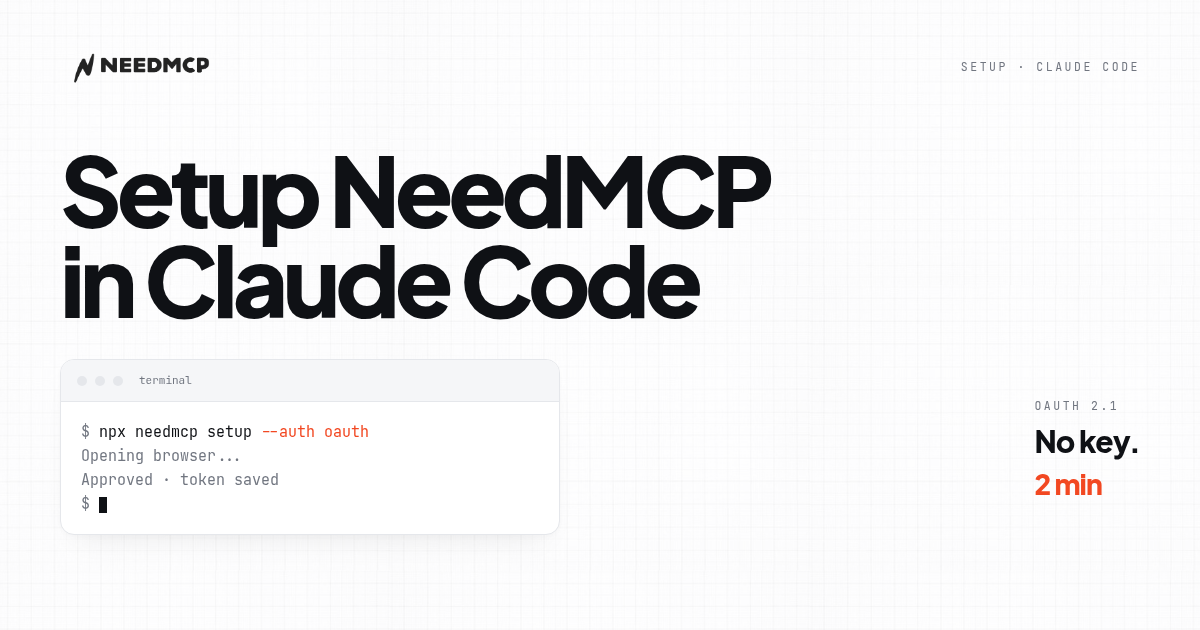
Setup NeedMCP in Claude Code in 2 minutes
One command, one browser sign-in, one style lock. The whole path from sign-in to a first page that uses NeedMCP, over OAuth 2.1.
How to build UI with an AI agent that doesn't look AI-generated
A practical guide for developers: how to use an AI agent so the UI it produces doesn't look generic, from design context to final checks.
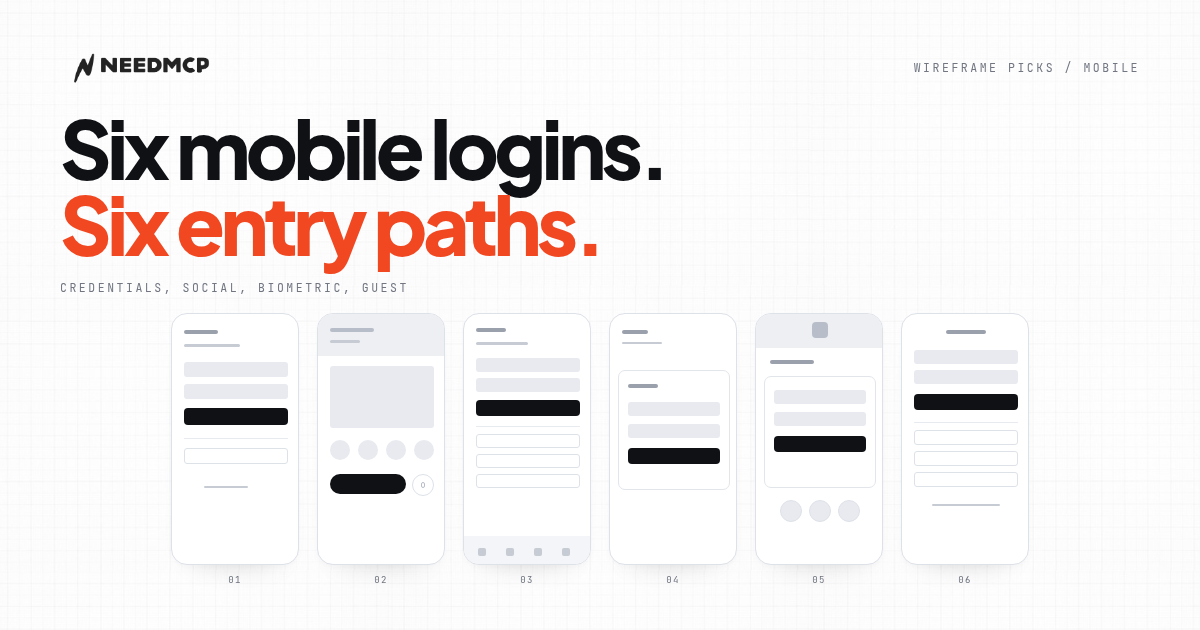
6 Mobile Login Screens That Don't Look AI-Generated
On mobile the login decision is not the card. It is how many entry paths share one screen. Six free layouts, compared by what each one offers and what it leaves out.
Ship UI that does not look AI-generated
Pull design tokens, wireframes, and modular sections straight into your project over MCP. No screenshot-to-guessing, no generic Tailwind defaults.